Helping children follow directions can feel challenging, especially during daily routines like brushing teeth, getting dressed, doing homework, or cleaning up toys. Many parents know what needs to get done, but getting a child to cooperate without stress can be the hard part.
One simple and effective tool is the First-Then strategy.
At Building Bridges Bangkok, we support children and families through evidence-based, personalized programs designed to build communication, social, daily living, and independence skills. First-Then is one of the practical strategies parents can use at home to make expectations clearer and routines more successful.
What Is the First-Then Strategy?
The First-Then strategy is a simple way to show a child what needs to happen first, followed by something preferred or motivating.
For example:
First brush your teeth, then story time
First finish homework, then play outside
First clean up your toys, then screen time
This approach helps children understand expectations in a clear, visual, and predictable way. It is commonly used in ABA-based support to encourage cooperation, reduce power struggles, and build positive routines. Building Bridges Bangkok’s ABA services focus on helping children strengthen communication, social, and everyday life skills step by step, which makes this strategy especially relevant for home use.
Why First-Then Works
Children often do better when they know:
what they need to do now
what will happen next
what they are working toward
Instead of repeating instructions or negotiating again and again, parents can use First-Then to create a simple structure. This can support:
1. Clearer expectations
Children are more likely to cooperate when instructions are short, direct, and easy to understand.
2. Better motivation
Knowing that a preferred activity comes after the task can help children stay engaged.
3. Reduced stress during routines
First-Then can make transitions feel more predictable and less overwhelming.
4. Growth in independence
Over time, children can begin to follow routines with less prompting.
These benefits align closely with Building Bridges Bangkok’s broader focus on communication, adaptive behavior, life skills, and functional independence for children and young people.
When Parents Can Use First-Then at Home
The best thing about First-Then is that it can be used in everyday moments. Parents can try it during:
morning routines
mealtime
homework time
bath time
bedtime
transitions away from preferred activities
getting ready for school
tidying up after play
Examples include:
First put on your shoes, then we go outside
First sit at the table, then snack time
First finish two math questions, then take a break
First put your plate away, then choose a game
These simple phrases help children understand that tasks come before rewards, while keeping the tone positive and calm.
How to Use First-Then Effectively
Parents do not need to make it complicated. Here are a few practical tips:
Keep the instruction simple
Use short language your child can understand. One task first, one preferred item or activity next.
Choose a meaningful “then”
The second part should be something your child actually enjoys, such as play, music, a favorite toy, a snack, or special time with a parent.
Be realistic
Start with small, achievable tasks. Success builds confidence.
Use visuals when helpful
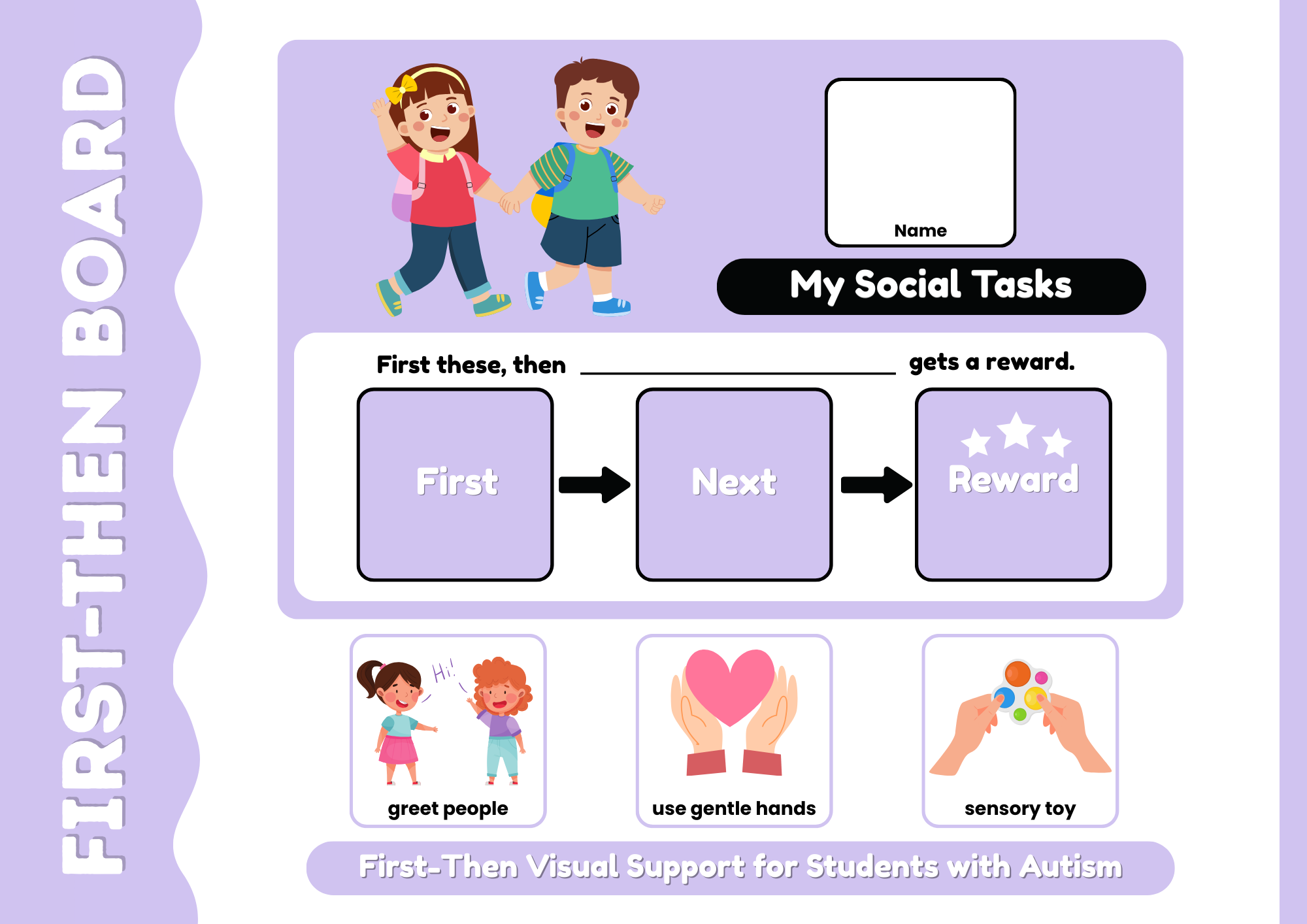
Some children respond best when they can see the routine. A First-Then board with pictures can make the message even clearer.
Follow through consistently
If you say, “First tidy up, then puzzle time,” try to keep that sequence consistent. Predictability builds trust.
Stay calm and positive
The strategy works best when presented as support, not as a threat.
First-Then and ABA Support
First-Then is often associated with Applied Behavior Analysis (ABA) because it uses structure, motivation, and clarity to teach functional skills. Building Bridges Bangkok provides ABA therapy that is personalized, holistic, and designed to help learners develop communication, social, and independence skills in meaningful ways. The organization also highlights collaboration with families and schools, which is important because children make the best progress when the same supportive strategies are used across settings.
For parents, this means First-Then is not just a behavior tool. It can also be part of a larger approach to helping children:
understand routines
build daily living skills
improve transitions
strengthen cooperation
feel more successful at home and at school
Supporting Children in Bangkok With Practical Strategies
Families in Bangkok often look for practical, respectful ways to support children at home while also building skills that carry over into school and community life. Building Bridges Bangkok offers services that include ABA therapy, home support, clinical support, parent and caregiver training, and professional development. This whole-child, collaborative approach makes strategies like First-Then more effective because parents are not using them in isolation.
When parents have the right tools and guidance, even small routine changes can make a big difference.
Use First-Then to Help Children Follow Directions at Home
We’ve created a useful PDF with printable “First – Then” board for you which you can take it anywhere you want so you can implement a First – Then strategy everywhere.
DOWNLOAD YOUR FREE “First - Then” PDF!